'Golden' Makes History: First K-Pop-Style Song to Win Both Grammy and Oscar

When the final envelope was opened at the 2026 Academy Awards, “Golden” from the soundtrack of KPop Demon Hunters took home the Oscar for Best Original Song—capping a historic awards season that saw the track also claim Best Song Written for Visual Media at the 2026 Grammy Awards on February 1, 2026. No K-pop-style song had ever won either award before; “Golden” became the first to win both.
For international audiences watching Korean music increasingly break through Western industry barriers, this double victory marks a new milestone—not just for individual artists, but for the global recognition of K-pop’s sonic and production aesthetics in film and television scoring.
What Makes ‘Golden’ K-Pop-Style?
“Golden” blends the signature production elements that define modern K-pop: layered vocal harmonies, polished electronic beats, dynamic tempo shifts, and a melodic hook designed for maximum emotional impact. The track features Korean lyrics alongside English, a bilingual approach common in contemporary K-pop that has helped groups like BTS and BLACKPINK reach global audiences.
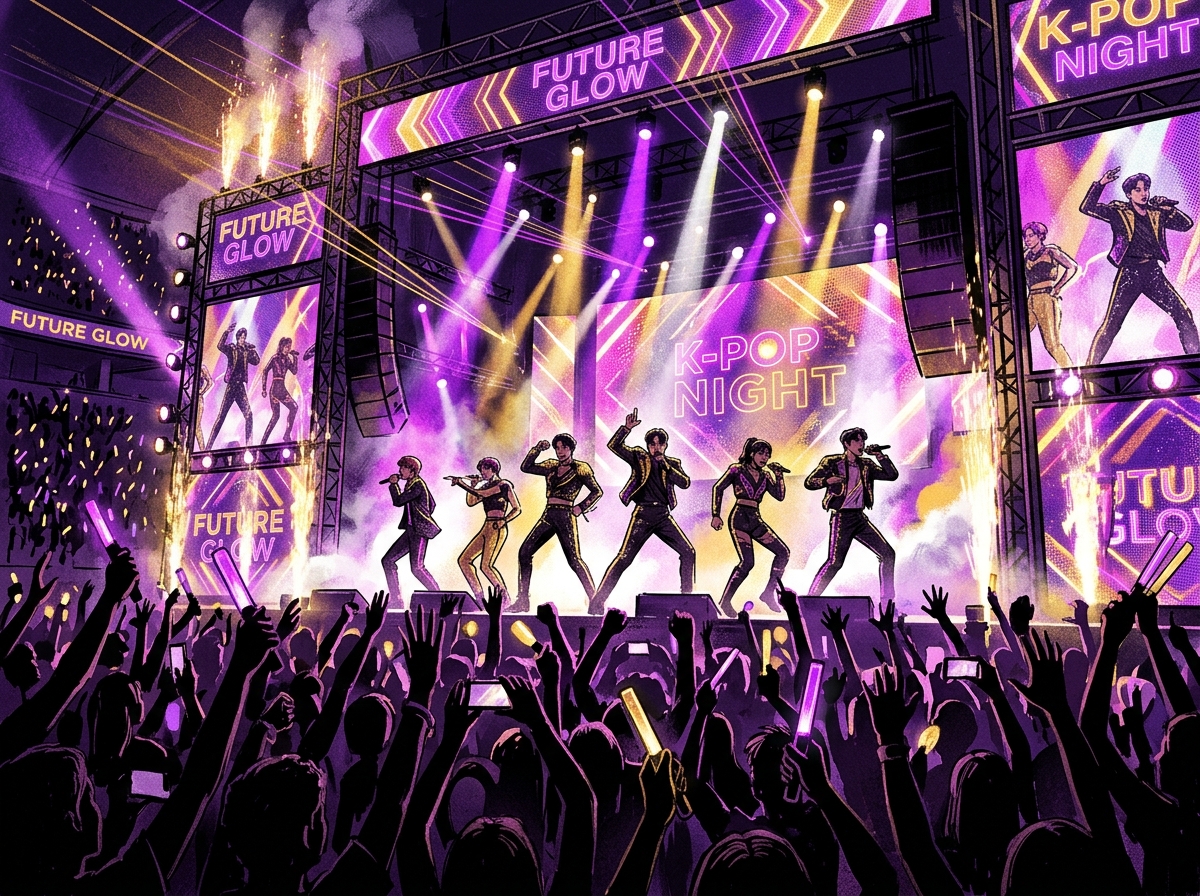
While KPop Demon Hunters is a fictional narrative property, “Golden” was crafted specifically for its soundtrack, embedding K-pop production techniques into a song written for visual storytelling. This category—songs created for film, TV, or other visual media—has historically been dominated by Western pop and orchestral ballads, making “Golden’s” wins all the more significant.
The Grammy Win: Best Song Written for Visual Media
At the 67th Annual Grammy Awards held on February 1, 2026, “Golden” won in the Best Song Written for Visual Media category. This Grammy category recognizes excellence in songwriting for films, television, video games, and other visual formats—distinct from the more general Song of the Year or Record of the Year awards.
The win represented a breakthrough for K-pop aesthetics in a space where Korean-language or K-pop-influenced tracks had rarely been nominated, let alone awarded. Previous winners in this category have included songs from major Hollywood films and animated features, making “Golden” the first K-pop-style entry to claim the trophy.
The Oscar Win: Best Original Song
Less than two months after the Grammy ceremony, “Golden” took the stage again at the 2026 Academy Awards, winning the Oscar for Best Original Song. The Academy Award for Best Original Song is one of the film industry’s most prestigious honors, recognizing a song written specifically for a motion picture and used in the film itself.
K-pop acts have performed at or been featured in major Hollywood projects before, but none had secured an Oscar win in this category. The Academy’s recognition of “Golden” signals a growing openness to non-Western musical styles in film scoring and songwriting, reflecting broader shifts in global film production and distribution.
💡 Context: Only a handful of non-English-language songs have won Best Original Song in Oscar history, making “Golden’s” bilingual Korean-English lyrics particularly noteworthy.

Why This Double Win Matters
Winning both a Grammy and an Oscar in the same year places “Golden” in rare company. The dual recognition underscores several important trends:
- Industry validation: Both the Recording Academy and the Academy of Motion Picture Arts and Sciences—two of the most traditional gatekeepers in American entertainment—have now recognized K-pop production and songwriting as award-worthy.
- Visual media expansion: K-pop’s growth has often been tracked through touring, streaming, and chart performance. “Golden’s” success highlights the genre’s expanding role in soundtracks and film scoring.
- Global storytelling: As international content gains prominence in Western markets (following trends seen with Korean films like Parasite and series like Squid Game), music that reflects those aesthetics is finding new platforms and audiences.
The wins do not guarantee an immediate flood of K-pop tracks in Hollywood soundtracks, but they establish a precedent and demonstrate commercial and critical viability for Korean-language and K-pop-style music in contexts beyond traditional album releases and concerts.
K-Pop’s Expanding Awards Footprint
Before “Golden,” K-pop acts had received Grammy nominations—most notably BTS, who were nominated multiple times in categories including Best Pop Duo/Group Performance—but wins remained elusive in the major categories. Korean artists had also contributed music to Hollywood projects, often in collaborations or soundtrack placements, but the Oscar for Best Original Song had never gone to a K-pop-style track.
“Golden’s” back-to-back victories in early 2026 mark a turning point, suggesting that the genre’s influence is no longer confined to music charts and social media virality. The wins reflect a maturing relationship between Korean pop production techniques and Western film and music industry institutions.
What Comes Next
The immediate impact of “Golden’s” historic wins will likely be seen in increased interest from filmmakers, music supervisors, and producers looking to incorporate K-pop elements into visual media projects. For international audiences, the awards serve as an introduction—or reintroduction—to the production sophistication and emotional range that K-pop songwriting can offer.
Whether this represents a one-time breakthrough or the beginning of a sustained trend will depend on future projects, industry investment, and audience reception. What is certain: “Golden” has set a new benchmark, proving that K-pop-style music can compete—and win—on the biggest stages in global entertainment.